Slow Day Supply - Full Story
During my internship at Shirts & Skins, a basketball apparel company, I decided I wanted to use what I had learned about apparel manufacturing to design a brand of my own. I have a pretty massive hat collection of around 50 hats. I was always trying to find ones that fit my head well while still having a cool, versatile design I could wear with different outfits. Since I’ve bought most of my hats online, there have been a lot of disappointments with fit, and I was sick of it.
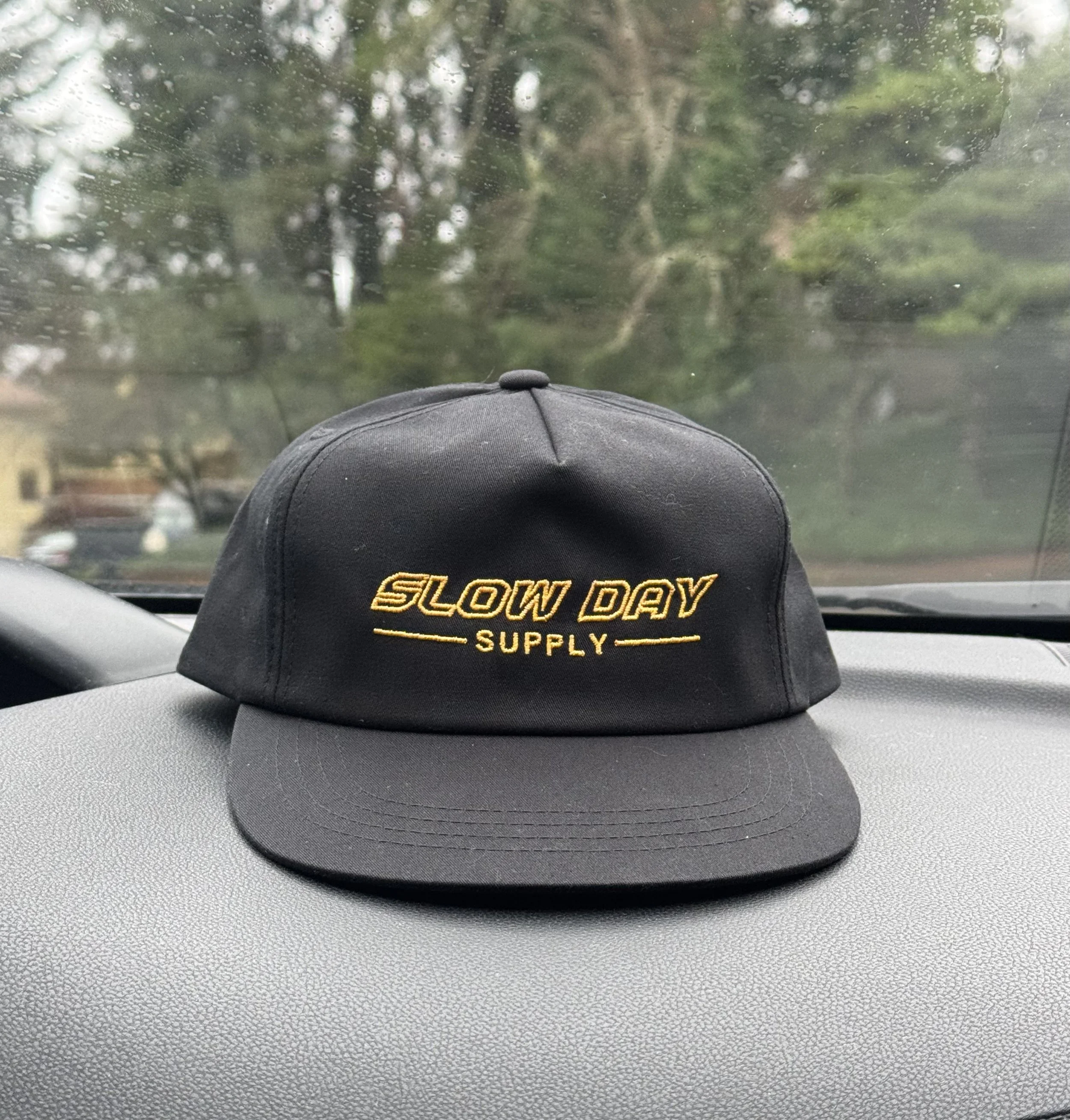
During my internship, I worked with a wide range of blank apparel manufacturers, including Independent Trading Co., Comfort Colors, American Apparel, JERZEES, AS Colour, Port & Company, Lane Seven, Bella+Canvas, Richardson, and Yupoong. Through that experience, I found that my favorite fitting blank hat was the Yupoong 6502, which is a 5 panel, unstructured, flat bill snapback. Even though I don’t keep the bill totally flat when I wear hats, I’ve learned that buying flat bills and curving them yourself is pretty much always better than buying a pre-curved bill.
I own a couple vintage hats from the 90s that have an amazing fit, but the exact blanks don’t exist anymore. One detail I have always liked about my vintage hats is the green underbrim, which is still popular in the streetwear community today, but it’s way more rare nowadays. Even though the Yupoong 6502 doesn’t have a green underbrim, it fits extremely similar to the vintage hats I own, and fit is everything. No matter how cool the logo or design is, if a hat doesn’t fit well, I probably won’t wear it too often.
Once I locked in the hat blank, I had to do the hard part, which was creating the brand. I didn’t have a super unique name in mind like Nike, I wanted something that could stand on its own without people needing to look it up to understand the meaning. Everything I did was very calculated. I can explain the reasoning behind every decision I made when designing the pieces and building the brand. I made decisions pretty quickly, but they were always thought through.
I liked the name Slow Day Supply because I knew I also wanted to make hoodies and sweats because not everyone wears hats, and the name had a relaxed, loungewear, chill feel to it. Once I had the name, I started designing the logo. I used Canva because I didn’t need a fancy design software to execute what I wanted, and it was free compared to Adobe. Keep in mind, I was a broke kid fresh out of college.
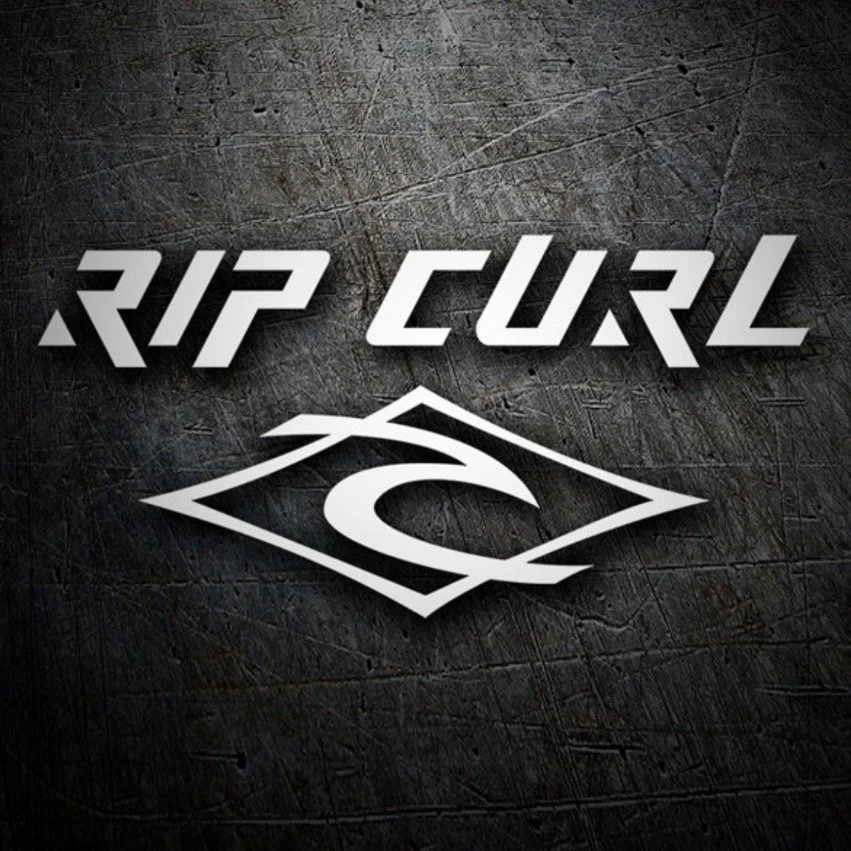
I’ve always loved wearing surf brands like Billabong, Quiksilver, RVCA, and Rip Curl, and I was especially drawn to an italicized font Rip Curl uses for one of their logos because it’s unique, but subtle at the same time. Since I didn’t have a special logo symbol, I knew consistency was important for the brand, especially with color. I like to wear dark colors, so I decided all of my blank hats, hoodies, beanies, and sweats would be dark. I’ve also always liked the contrast of golden yellow text on a dark background, so that became a core part of the brand.
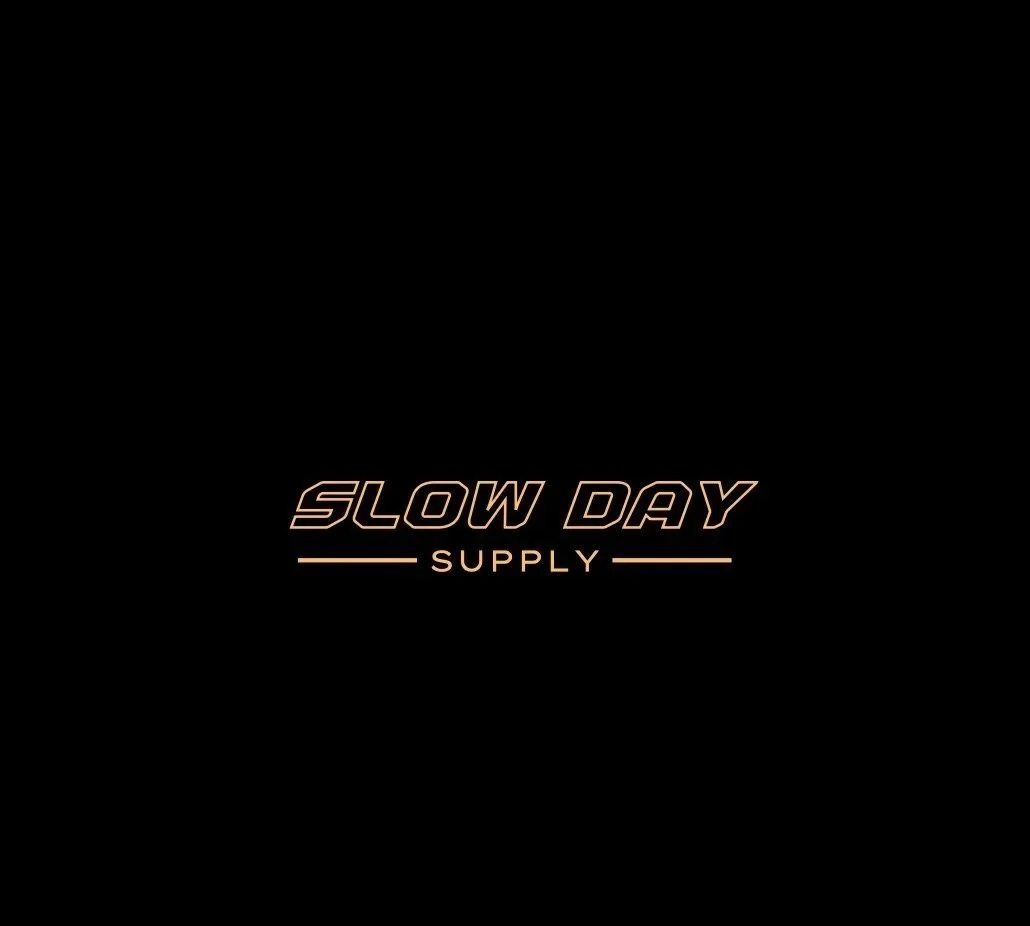
When designing the logo, I wanted “Slow Day” to be more visually noticeable than “Supply” since the “Slow Day” part is what really holds the meaning. I used a bold, Rip Curl inspired font for “Slow Day” and made it an outline instead of a bold fill. This helped save money on embroidery costs, and I think it looks better too. I knew I wanted everything to be embroidered because it’s higher quality than screen printing. The only time I don’t really like embroidery is on T-shirts, which worked out since I never planned on making any.
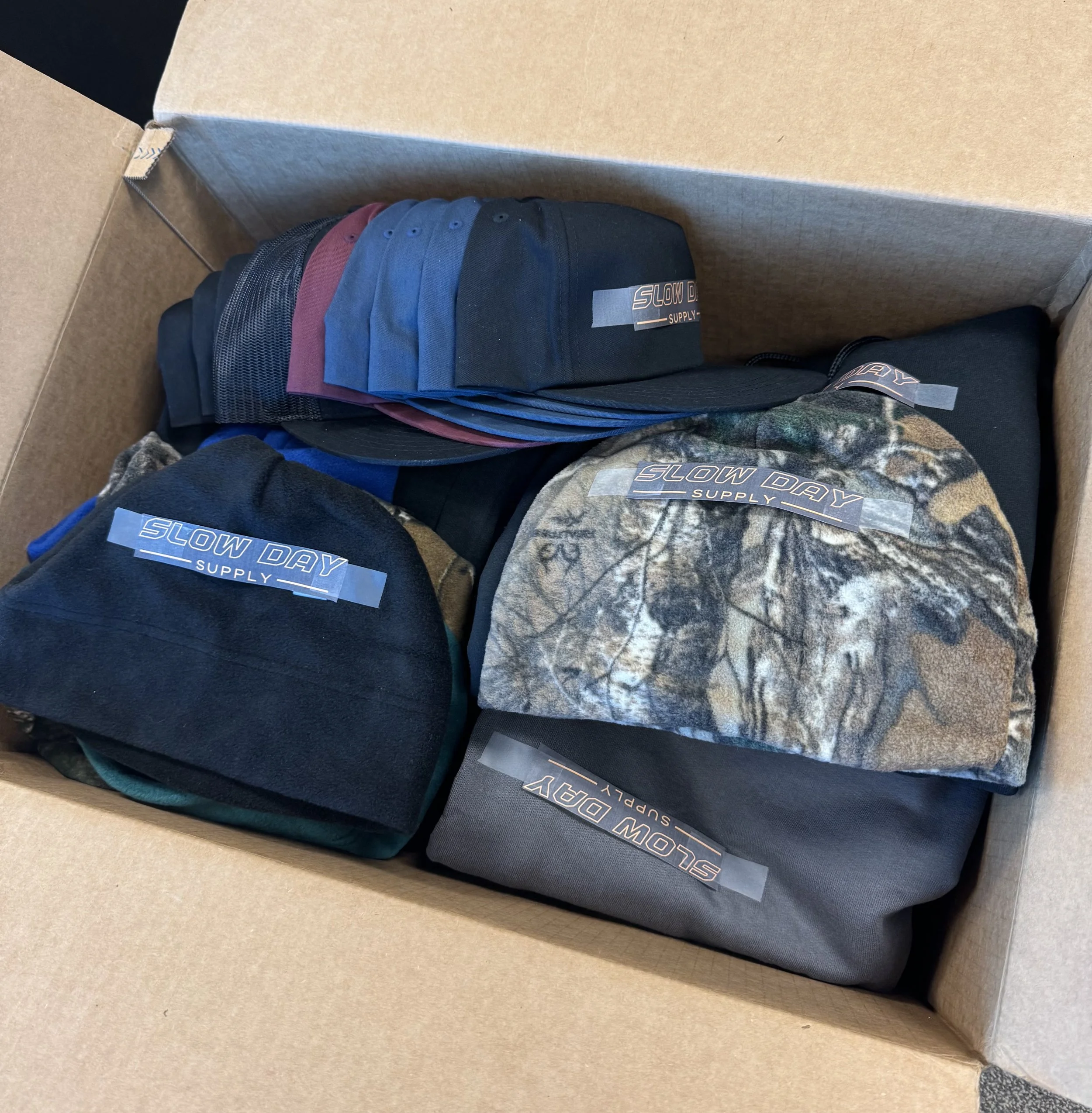
When confirming embroidery details, it was cheapest to keep the logo the same size and color across every product. That worked great because I liked the yellow logo on all of the blanks. For sizing, I just picked the size that looked the best on the hats and then used that for everything else too. The more money I saved, the more pieces I could make, so I did everything I could to keep costs down.
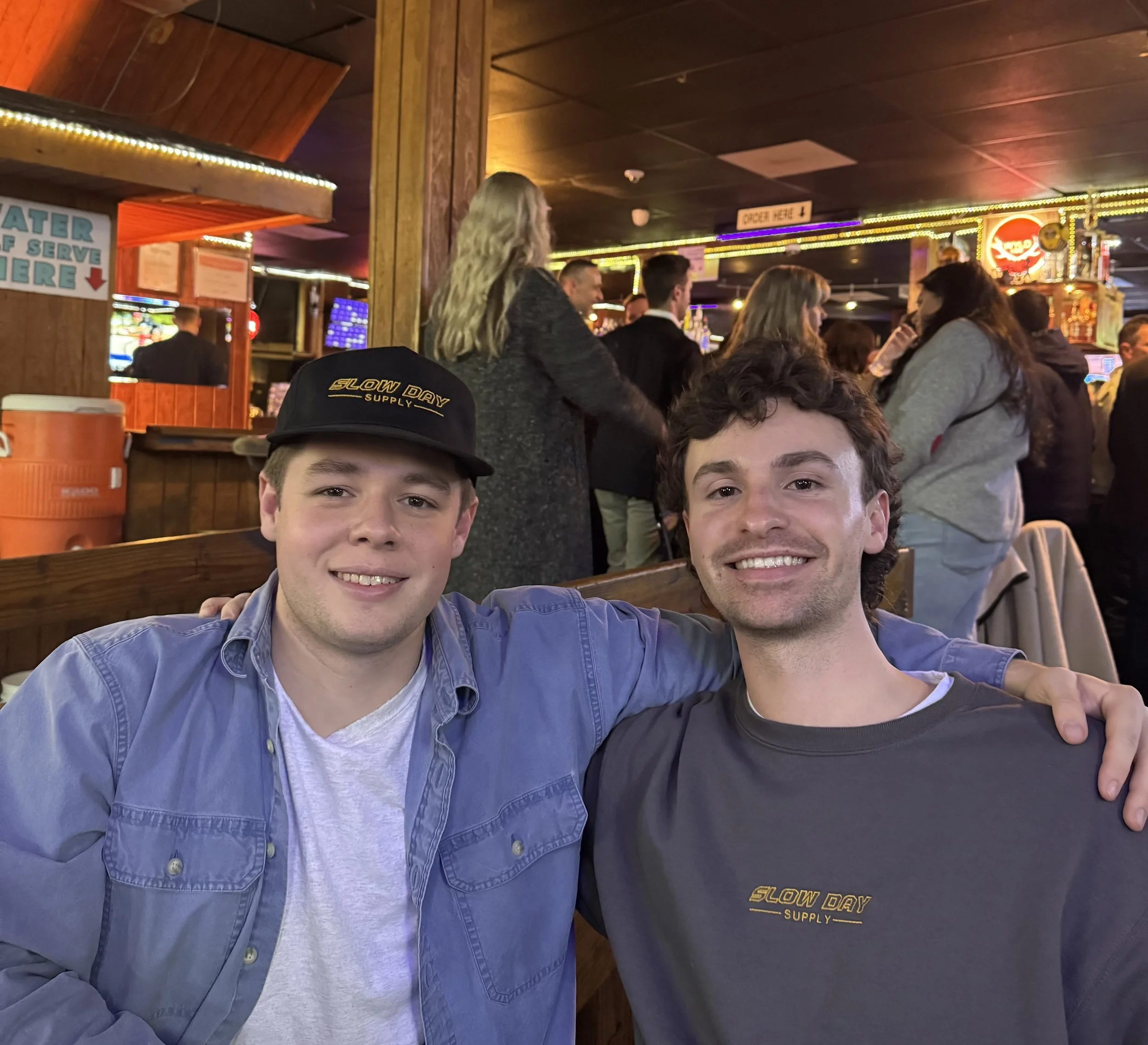
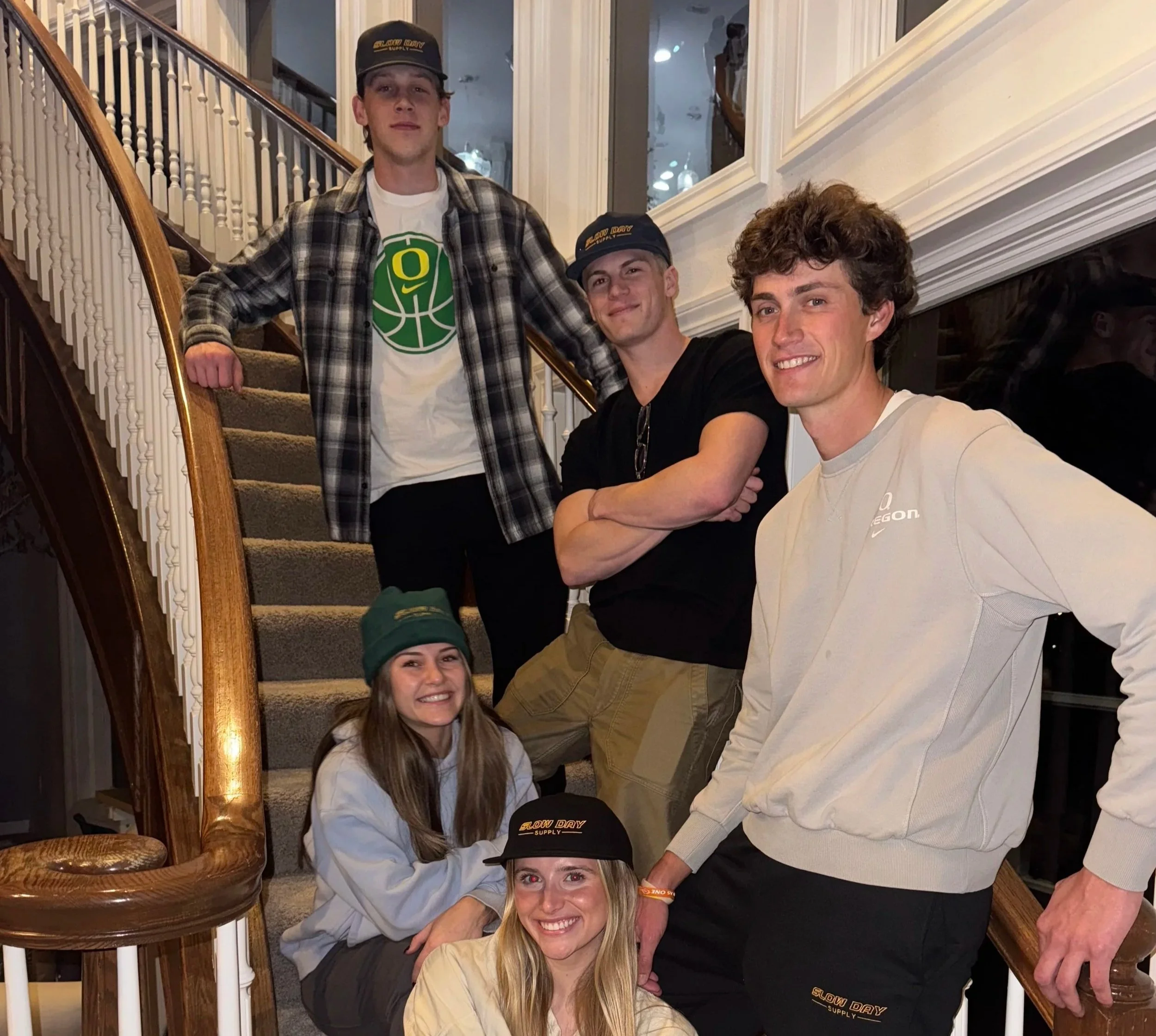
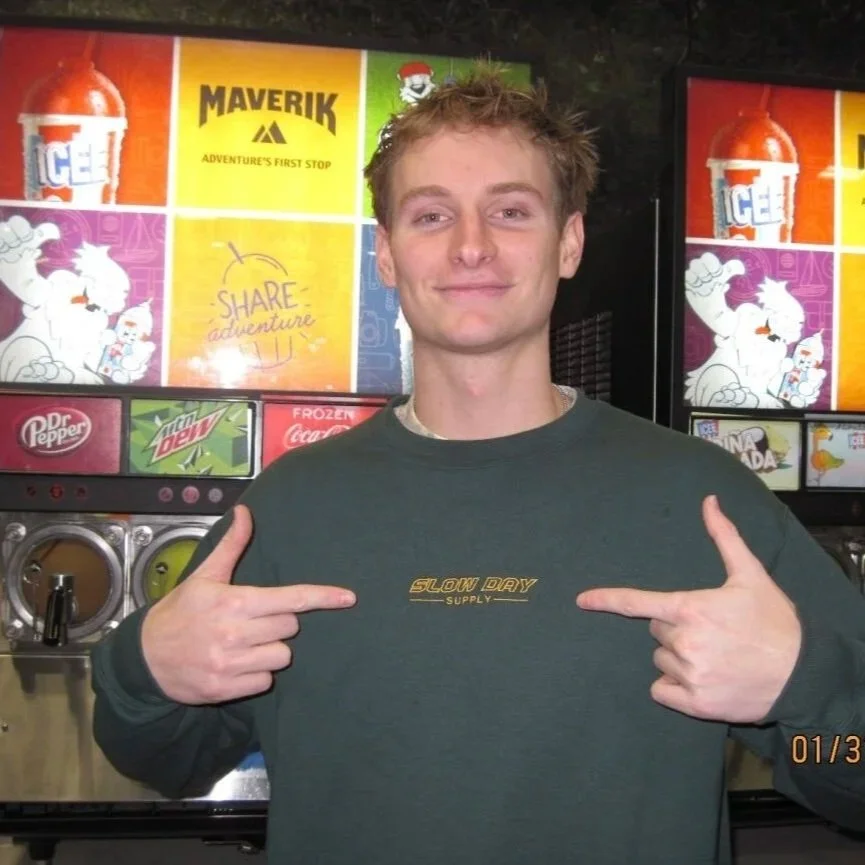
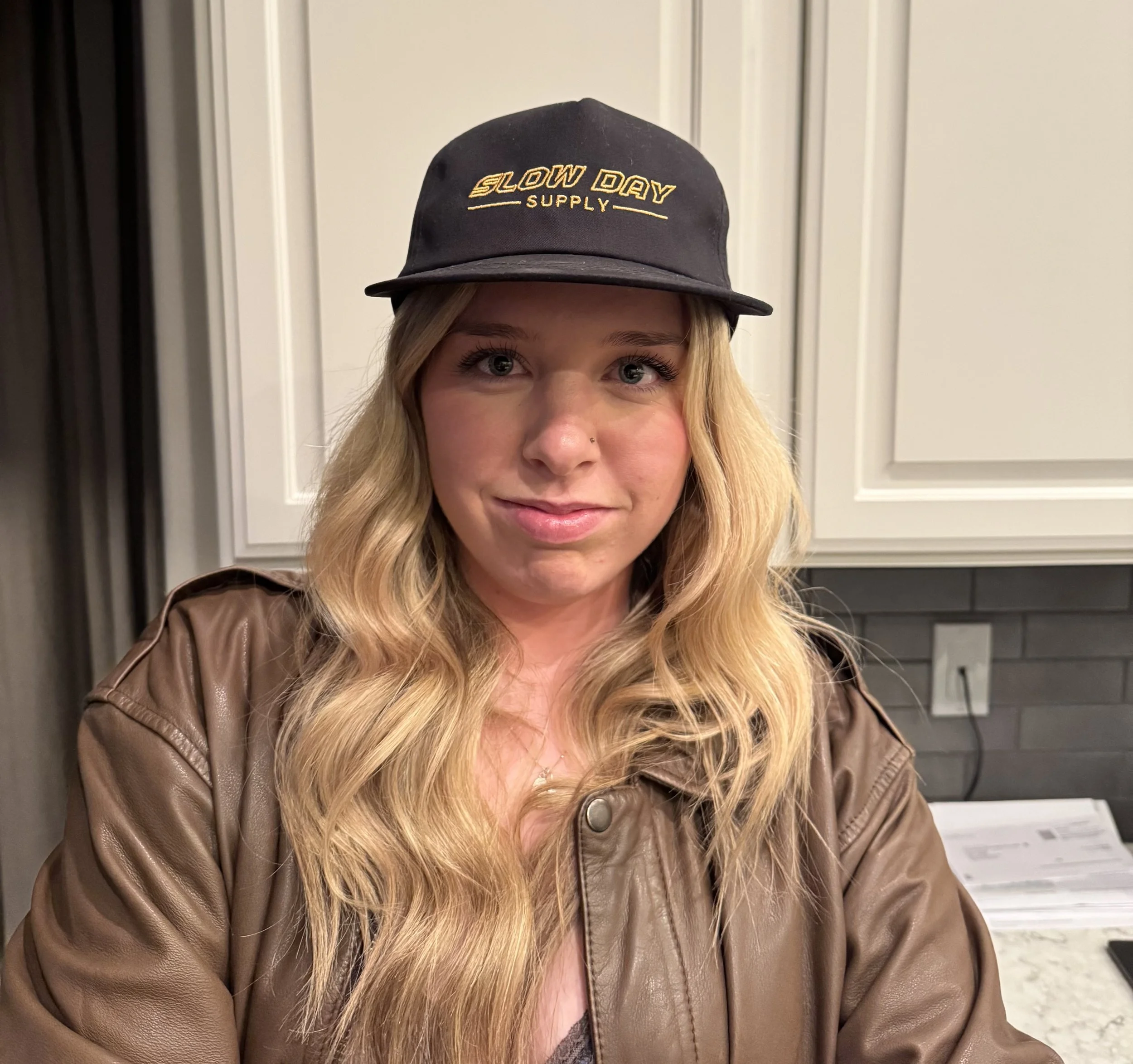
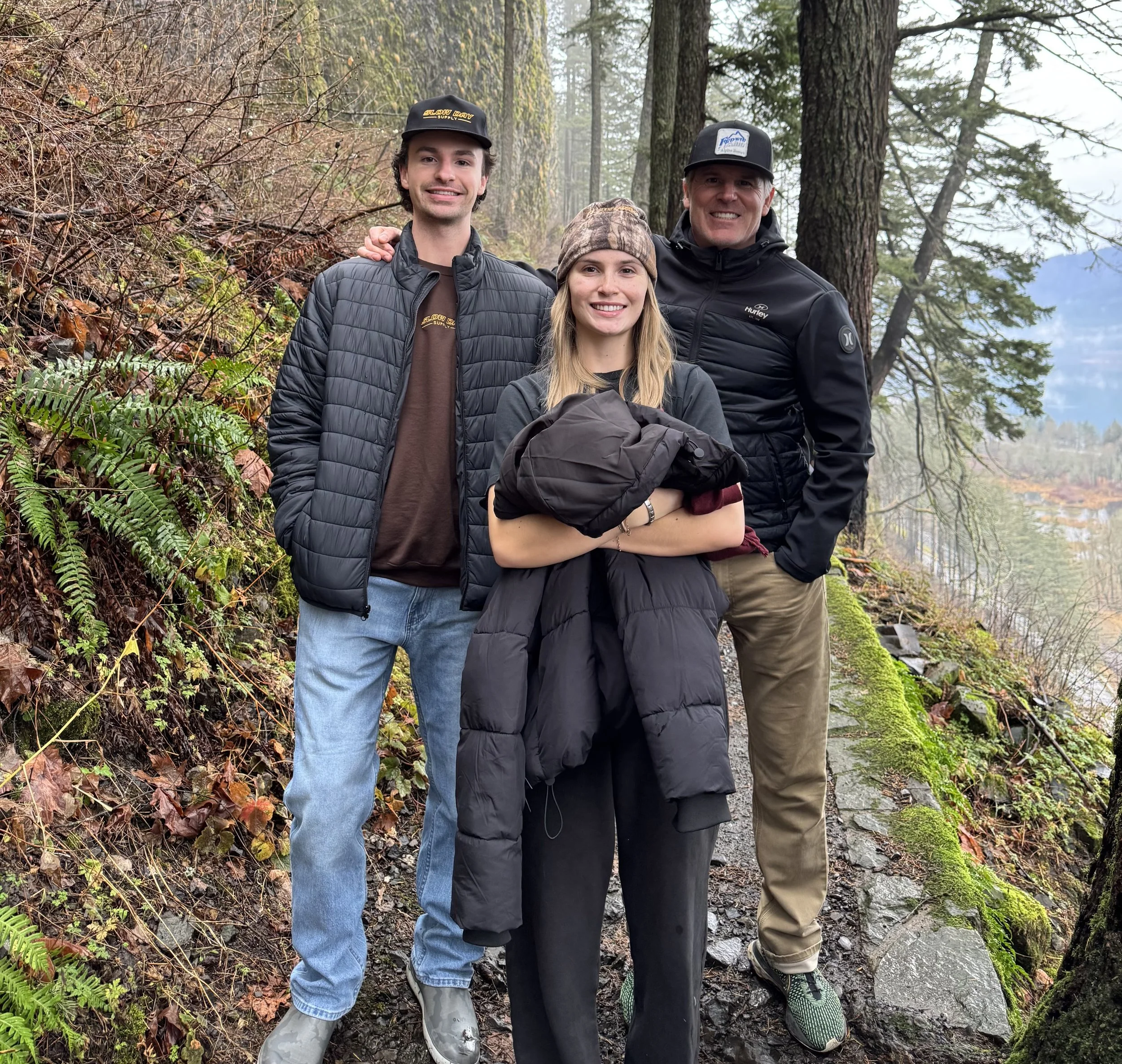
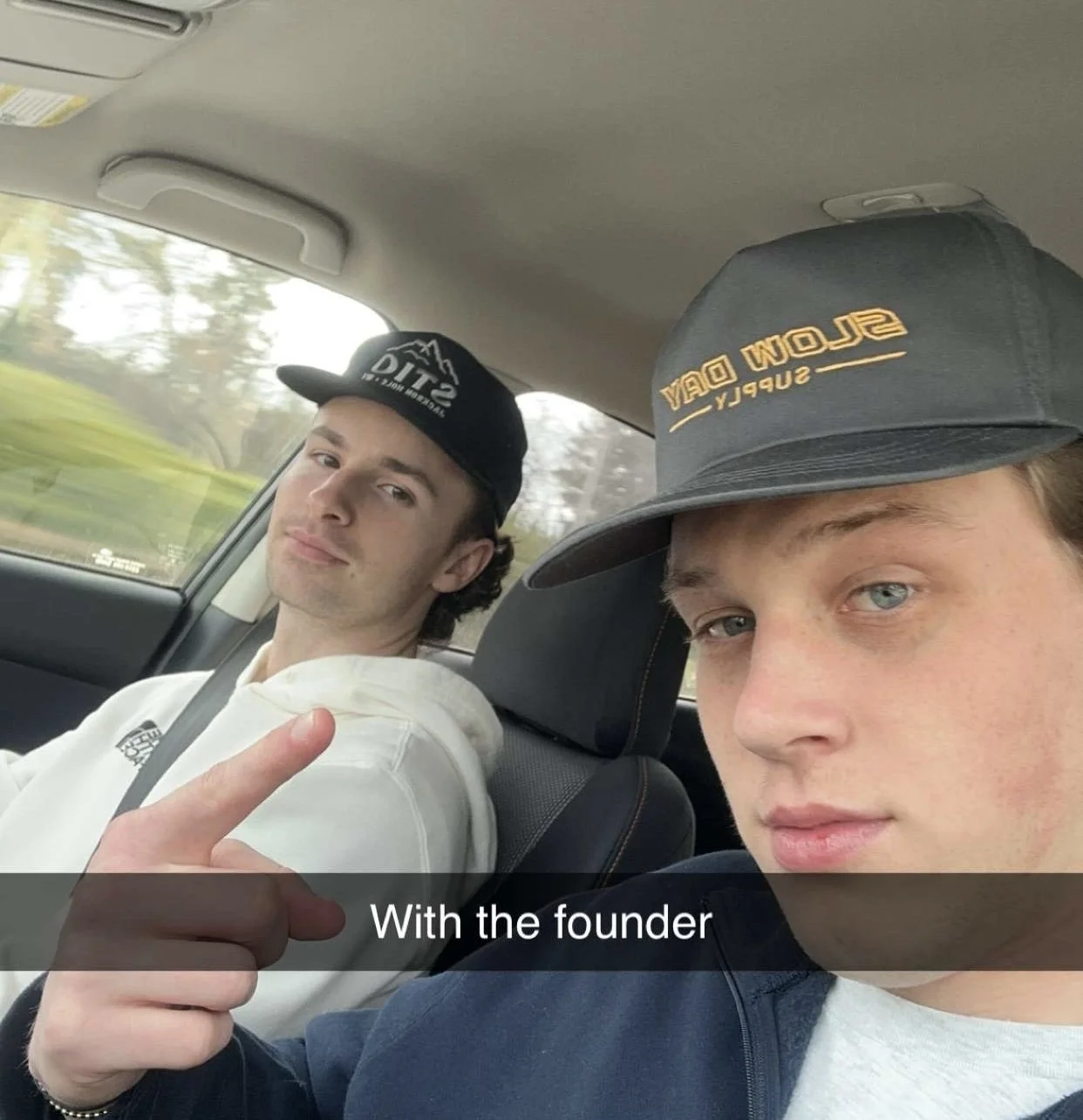
For the first order, I pretty much just guessed what my close friends would like and ordered some extras. I gave free stuff to my close friends, took photos of them wearing the products, and posted them on an Instagram account I made for the brand. At the time, I didn’t really understand brand identity, so I mainly used social media to show people wearing the clothes. For my first time trying to build a brand for fun, it still worked pretty well.
After the initial launch to friends and family to get the ball rolling, I handled all orders directly through the Instagram account I created for the brand (https://www.instagram.com/slowdaysupply/). I didn’t want to commit money to building a Shopify store since the brand was very experimental and mostly for my own enjoyment. Because I didn’t have any stock and wanted to avoid being stuck with sitting inventory, I decided a preorder system made the most sense. I posted all the products, color options, pricing, and detailed descriptions on Instagram, then had people DM me their orders and Venmo me directly. I kept track of everything in the notes app on my phone and made sure to clearly communicate the preorder deadline. The Instagram preorder system worked well at this scale. I know it couldn’t handle real traffic, but for my first go around, it was free and did exactly what I needed it to do.
I never had crazy expectations that the brand was going to take off. I just wanted to make something I liked wearing and hopefully my friends would like it too, and maybe I could even make a little money from it. Thankfully, that’s exactly what happened and I really enjoyed the process/experience!